Looking for museum artifacts, archival photography, historical documents, and more? Search Our Collections
We Can Do It!
The War Effort at Home
With so many Americans in overseas service, U.S. war industries desperately needed workers.
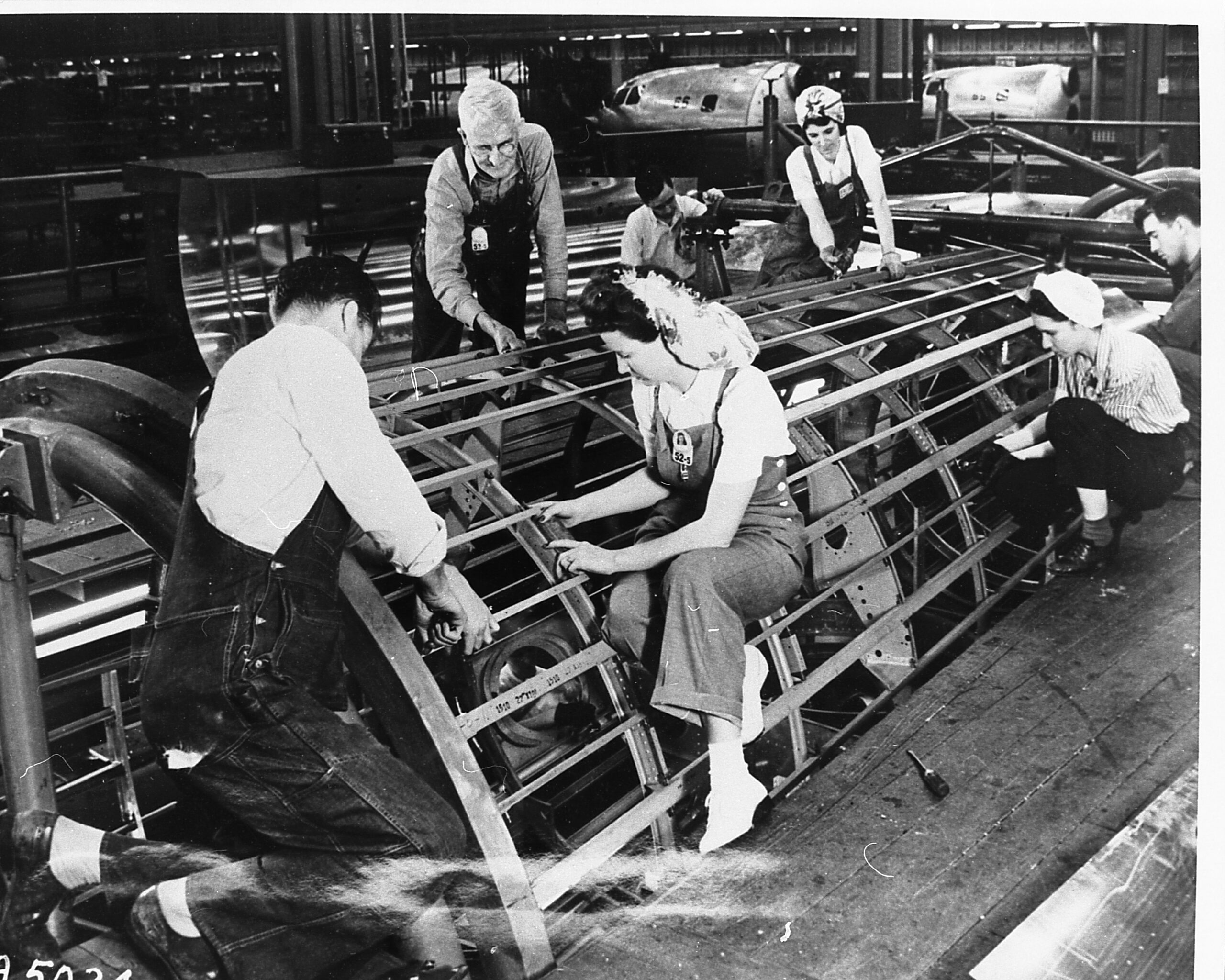
Over 6.5 million women filled that need in defense plants where they performed jobs, such as riveting and welding, that were previously believed to be beyond women’s abilities. Thousands of people volunteered for service organizations, such as Red Cross, United Service Organizations (USO), and Civil Defense agencies.
Children contributed to the war effort by holding scrap drives to collect items for recycling. War industries used leftover kitchen grease to make explosives; nylon and silk stockings to make parachutes and rope; and worn-out tires to ease critical rubber shortages. Americans were urged to mend clothes and repair appliances rather than buy new ones. In early 1942, the government instituted mandatory rationing to conserve materials and food needed for the war effort. Among the most important items rationed were gasoline, rubber, sugar, butter, and meats. Even with rationing, shortages were common.